When Not to Repair Electronics Yourself
- Stop when the energy is unknown
- Keep mains and high voltage closed
- Decline safety and life-support functions
- Stop at damaged batteries
- Treat contamination as a specialized hazard
- Avoid encrypted, paired, or calibrated guesses
- Stop when the board cannot be restored
- Respect legal and environmental limits
- Choose the safer alternative
- Sources
Stop when the energy is unknown
Do not open equipment when you cannot identify every source, stored-energy component, isolation boundary, and safe deenergization procedure. Unplugging may leave charged capacitors, batteries, spring mechanisms, lasers, hot surfaces, or backfeed paths active.
OSHA workplace guidance treats deenergization as something qualified people verify with suitable inspected test equipment, not something inferred from a dark indicator.
Keep mains and high voltage closed
Mains-powered appliances, offline switch-mode supplies, motor drives, solar and grid-connected equipment, microwave ovens, CRT displays, camera flash units, large amplifiers, electric-vehicle systems, and other high-energy products require task-specific qualification, rated instruments, PPE, isolation, guarding, discharge, and legal controls.
Do not defeat interlocks, isolation slots, protective earth, fuses, thermal cutoffs, shields, or covers. A YouTube pause button is not an energy-control procedure.
Decline safety and life-support functions
Medical devices, fire and gas alarms, vehicle restraints, braking and steering electronics, child-safety products, aviation, industrial safeguards, security-critical access, pyrotechnics, and emergency communication can cause harm when a repair is wrong or unverified. Use the manufacturer or qualified authorized service and required calibration or certification.
Even a simple-looking solder joint can change a legally controlled safety system.
Stop at damaged batteries
Do not charge, puncture, open, straighten, compress, solder directly to, or reuse swollen, hot, leaking, crushed, corroded, wet, smoking, or unidentified cells and packs. Move people away, follow manufacturer and emergency authority instructions, and use appropriate hazardous-material channels.
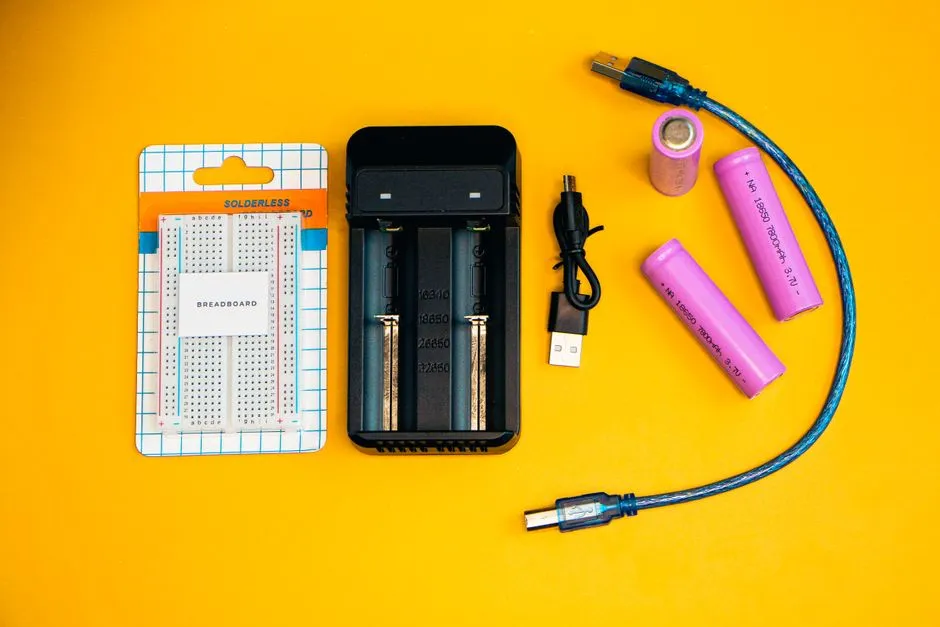
Read battery-project safety for intact documented systems only.
Treat contamination as a specialized hazard
Floodwater, sewage, pests, mold, battery electrolyte, mercury, beryllium ceramics, asbestos in vintage equipment, lead dust, refrigerants, oils, and unknown residues require material identification, protective equipment, containment, and disposal. Do not blow dust with compressed air or heat unknown contamination.
CDC/NIOSH notes that lead dust and fumes may be invisible or odorless. Eating or drinking in a lead work area and failing to wash hands are among the behaviors it identifies as increasing exposure risk.
Avoid encrypted, paired, or calibrated guesses
Some components require firmware, cryptographic pairing, safety calibration, pressure or leakage testing, high-voltage isolation tests, RF compliance, or manufacturer programming. A part that physically fits may leave the product unsafe, noncompliant, or unusable.
If verification equipment and specifications are unavailable, replacement of the product or professional service is the honest endpoint.
Stop when the board cannot be restored
PCB inspection may reveal carbonized laminate, damaged isolation barriers, torn internal layers, widespread corrosion, inaccessible liquid, missing pads, counterfeit parts, or prior repairs that destroyed traceability. Jumper wires cannot restore every clearance, current path, or mechanical support.
An irreplaceable board is a reason for better rework, not riskier improvisation.
Respect legal and environmental limits
Radio transmitters, chargers, medical products, safety devices, energy meters, locks, emissions equipment, and other regulated systems can have rules governing modification, operation, certification, and disposal. Check the responsible authority and manufacturer before altering them.
EPA says lithium-ion batteries and devices containing them should not go in household garbage or recycling bins. Use an appropriate battery or electronics collection channel.
Choose the safer alternative
Options include manufacturer service, a qualified independent specialist, board-level rework shop, replacement module, donor data recovery by a professional, safe product replacement, or certified recycling. Remove personal data through documented methods before disposal where possible.
Use the low-voltage bench guide to define what remains in hobby scope. Walking away is not failure; it is a repair decision that protects the operator, the building, and the next person who touches the device.
The best technicians know many ways to open a product. The excellent ones also know when the screws should remain emotionally supported by the case.