How to Clean Flux Residue Safely
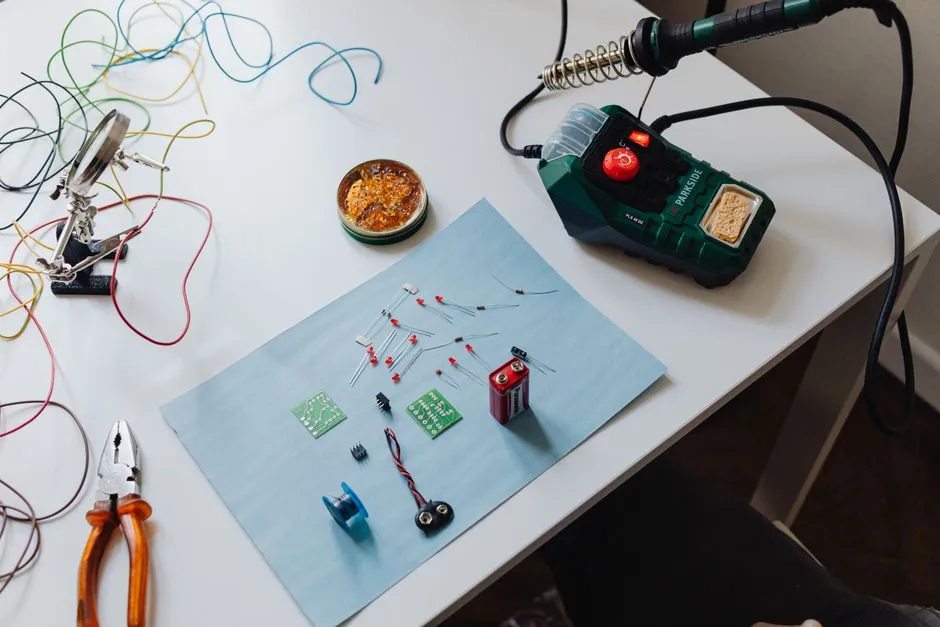
- Identify the flux before choosing a cleaner
- Deenergize and remove stored energy
- Read the cleaner compatibility list
- Apply the smallest controlled amount
- Manage lead and flux contamination
- Rinse only when the process specifies it
- Dry completely before power
- Inspect the soldering after cleanup
- Verify electrically before full power
- Sources
Identify the flux before choosing a cleaner
Rosin, water-soluble, no-clean, organic-acid, and specialty fluxes have different residue and cleaning requirements. Read the solder, flux, board, component, and cleaner documentation. “No-clean” describes a process condition, not a promise that every visible residue is harmless in every high-impedance, coated, humid, or cosmetic application.
Never use plumbing flux on electronics.
Deenergize and remove stored energy
Disconnect power and batteries, follow documented discharge procedures, and verify the known low-voltage assembly is deenergized. Remove socketed, porous, display, microphone, speaker, sensor, relay, switch, or other parts only when the assembly instructions require it.
Do not clean mains, high-voltage, damaged battery, medical, or unknown equipment as a beginner repair.
Read the cleaner compatibility list
A solvent can craze plastic, erase labels, swell seals, dissolve adhesives, damage coatings, carry contamination beneath packages, or leave its own conductive film. Confirm compatibility with laminate, mask, markings, connectors, lenses, elastomers, coatings, and component bodies.
Use ventilation and protective equipment from the safety data. Keep ignition sources away from flammable cleaners.
Apply the smallest controlled amount
Use an approved dispenser, lint-free swab, or suitable ESD-safe brush to loosen residue without flooding switches, relays, displays, or unsealed components. Work from cleaner areas toward contamination and replace wipes rather than redistributing dissolved flux around the board.
Do not scrape traces or solder mask with metal tools.
Manage lead and flux contamination
CDC/NIOSH explains that lead dust and fumes may be invisible or odorless. It also identifies eating or drinking in a lead work area and not washing hands as behaviors that increase exposure risk. Keep cleaning materials contained, avoid compressed air that spreads debris, and wash hands after handling leaded assemblies.
Dispose of solvent, wipes, solder debris, and contaminated materials according to product and local hazardous-waste rules. Do not pour unknown cleaner down a drain.
Rinse only when the process specifies it
Water-soluble flux may require a controlled aqueous process with suitable water quality, temperature, rinse, and drying. Tap-water rinsing on a populated assembly can leave minerals or trap moisture. Follow the manufacturer process rather than converting the board into a tiny sink experiment.
Dry completely before power
Remove cleaner through the approved method and allow sufficient drying for connectors, vias, under-package spaces, and porous materials. Time depends on cleaner, volume, airflow, temperature, geometry, and component restrictions; there is no universal wait.
Inspect for moisture, residue, fibers, corrosion, damaged labels, and pooled cleaner. Do not use uncontrolled heat that damages parts or ignites vapor.
Inspect the soldering after cleanup
With residue removed, examine solder joints, bridges, mask, pads, and component orientation under angled light. Use the full PCB damage check when leakage, corrosion, or burning was present.
If the board will be conformally coated, follow the coating system's cleanliness, compatibility, masking, and validation requirements.
Verify electrically before full power
Check expected resistance and absence of unintended shorts while deenergized, accounting for parallel paths. Then power only the isolated low-voltage circuit through an appropriate current limit and monitor for leakage-related instability, current change, heat, or odor.
Use the repair stop guide if contamination reached hazardous, safety-critical, or inaccessible systems. A board can look spotless and remain electrically wet; aesthetics are not a drying standard.